Find out what lies beneath
Pebbledash Removal Sandbach | Trials, Backgrounds & Finishes
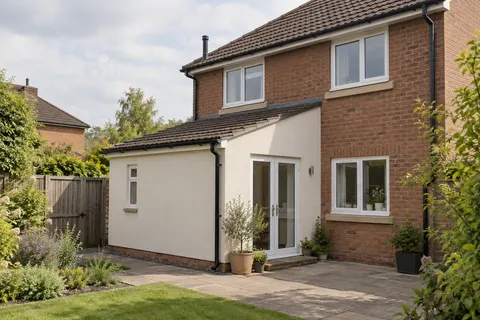
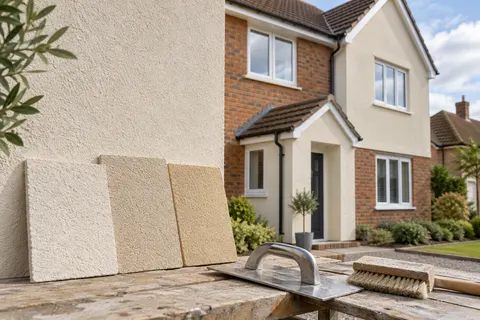
Removing pebbledash is only one stage in changing a wall. The covering may release unevenly, and the masonry beneath may need repairs before it can receive a new finish. A Sandbach removal proposal should explain how the first trial will be assessed and what happens after the surface comes off. It should also distinguish complete removal from retaining a sound covering under an appropriately specified alternative.

On this page
Start with the reason for changing it
An unwanted texture, isolated failure and widespread loss of adhesion are different starting points. If the finish is sound and appearance is the main concern, a compatible coating may be worth comparing with removal. If it is loose or affected by a continuing defect, decoration alone will not resolve that condition. The assessment should establish which problem the proposal is intended to solve.
Pebbledash is a description of the visible finish, not a full account of the wall beneath it. Its age, base material, previous repairs and coatings may be uncertain. Do not assume that every similar-looking elevation will release in the same way. A proposal based on the actual surface is more useful than a standard removal promise.
- Trial area A small patch is taken off to see how well the dash is bonded and what lies beneath.
- Removal Dash and backing render are hacked off to masonry or to a sound backing coat.
- Clear and dispose Debris is bagged or skipped; this is heavy, dusty and noisy work.
- Repair the masonry Exposed bricks, blocks and joints are repaired before anything new goes on.
- New render system The wall is rendered with the chosen system, or left as fair-faced masonry if suitable.
The usual order of work. The survey and the chosen products decide the actual steps.
Give the trial area a specific purpose
A trial can show how firmly the covering is bonded, how it separates and what condition the exposed background is in. Choose a location that is relevant to the planned work, with permission to investigate and a plan for leaving it protected. A convenient patch behind a bin may not represent an altered bay or a heavily repaired corner.
Record the method used and what the trial revealed. Useful findings include damaged mortar, changes of masonry, earlier coatings or areas where removal disturbs the face of the wall. Those observations can change the preparation or the proposed replacement system. The trial should lead to a decision, not simply provide a photograph that the surface can be broken off.
One sample also has limits. Different elevations or extensions may have different backgrounds, so further checks can be needed where the construction changes. The quotation should explain how new findings will be reviewed before the removal area expands.
| Finding | What it helps decide | What remains uncertain |
|---|---|---|
| Covering releases cleanly | A possible removal method | Whether all elevations behave alike |
| Masonry face is damaged | Repair or retention options | Extent beyond the trial |
| Old patches are exposed | Background preparation | Condition behind untouched areas |
| Several coatings are present | Further compatibility checks | Full system choice without assessment |
Define the removal limits and the edges
Mark the surfaces included and how removal will stop beside retained material. Corners, window surrounds and roof junctions need care because damage there can affect more than the visible finish. A small porch can contain many such edges even when the total area is modest. The method should suit the building and the features that are staying.
If only part of an elevation is being stripped, establish how the replacement will meet the retained finish. That boundary needs to be sound and physically suitable, and its appearance should be discussed. The wall rendering guide considers limited projects, while house rendering helps organise a broader removal and replacement programme.
Do not assume exposed brick will be the final finish
The masonry may have been covered because of its original appearance, later alterations or previous damage. Removing pebbledash can reveal patched openings, mixed brickwork or repairs that were never intended to be seen. Cleaning or repairing that background is a separate scope, and it may not produce the exposed-brick appearance imagined at the outset.
Agree whether the aim is a new rendered finish, an assessed exposed surface or a decision after investigation. A promise of pristine brickwork before a trial is not a sound basis for the contract. Where traditional masonry is involved, the lime guide explains why the repair materials and replacement finish need to suit the wall.
Prepare the background for the next system
After removal, the wall may need repairs, cleaning and other specified preparation. Those operations should be identified before a replacement finish is applied. The chosen system may be silicone, monocouche or another suitable build-up, but its suitability follows the condition of the background rather than the fact that the pebbledash has gone.
Recurring cracks, defective junctions and leaks should be considered separately. New render cannot be expected to conceal an active problem indefinitely. The repair page explains how to distinguish the visible damage from its cause. Keeping those items separate makes it easier to see what the removal contractor, renderer and any other trade are each responsible for.
Plan for debris, access and occupied spaces
Removal produces waste and can affect nearby glazing, paths and landscaping. The work area and handling route should be planned, including how debris is contained and removed. An occupied home needs a usable arrangement for essential access that keeps people clear of the work. A recently laid drive deserves a specific protection discussion rather than a casual assurance that it will be covered.
Access equipment must suit the work and the surrounding ground. Roofs, narrow passages and neighbouring boundaries can affect the arrangement. The quotation should identify those constraints and the responsibilities for protection, cleaning and reinstatement. A low wall or short programme does not remove them.
Compare the alternatives on the same basis
A proposal to remove and replace should be compared with any retention option using the same expected finish and completion standard. Include preparation, repairs, access, edge details and waste. A compatible colour-change coating over a suitable surface is a different operation from creating a new smooth wall after removal.
The Sandbach homepage links the available services, and the costs guide helps separate the items in a quotation. The right choice is the one supported by the wall assessment and a clear description of the intended result.
Common questions
Can a sound pebbledash surface always be over-rendered?
No. Firm adhesion is only one consideration. The proposed system must be suitable for the existing surface, coatings and background, with the required preparation and details.
Does removal include making the wall ready for the new finish?
Only if the scope says so. Removal, masonry repairs and preparation for the next system should be identified separately so there is no gap between the operations.
See housing and planning information for Sandbach and nearby places, including the source and geography behind each figure.